



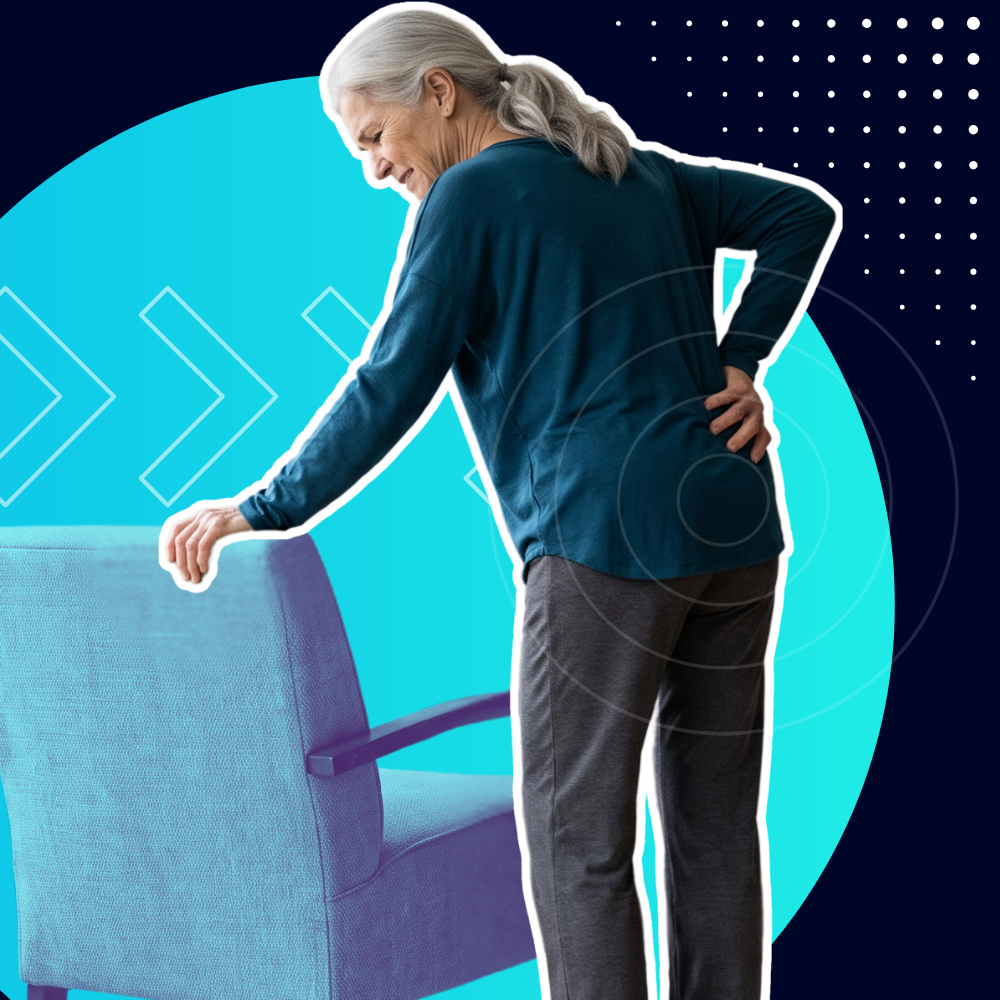
SI joint exercises can help you move more comfortably when pain near the back of your pelvis makes walking, lifting, turning, or getting out of a chair difficult. The goal is not to force the joint back into place. It is to restore comfortable movement and improve the strength and control around it.
This guide was inspired by a Sporty Doctor app user who asked what could help with SI joint pain. It gives you a gentle place to begin, explains why each movement may help, and shows you how to progress without trying to stretch or pop the joint in every direction.
The SI joint is strong and stable, and it normally moves only a small amount. A feeling that it is “out” may come from irritation, restricted motion, muscle guarding, or poor control through the pelvis. Hands-on osteopathic treatment can sometimes provide short-term release, but exercise helps build the support your pelvis needs during everyday movement.
The short version: Start with gentle mobility, then strengthen the glutes and core muscles that help steady your pelvis. The best SI joint exercises address both.
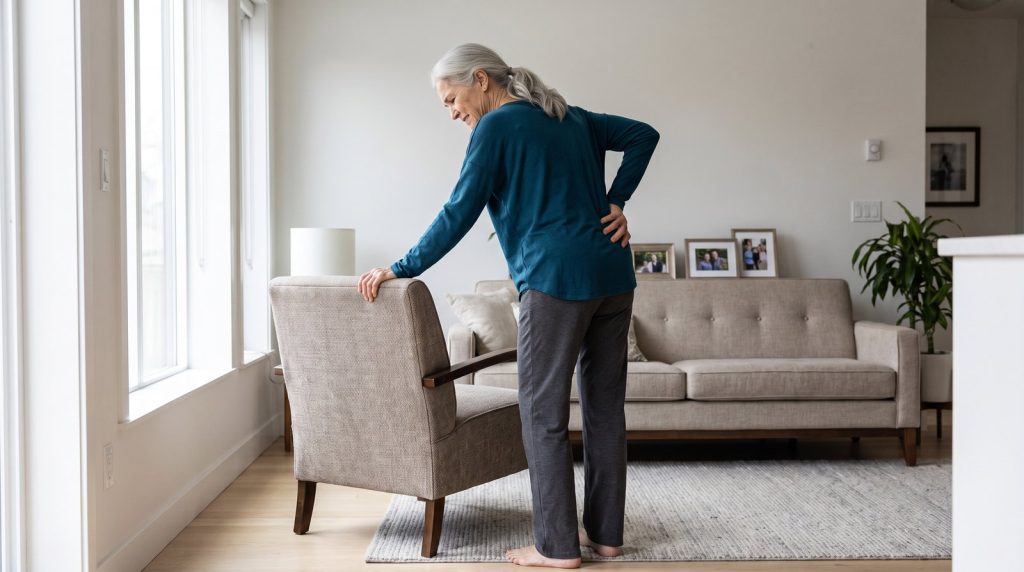
What Your SI Joint Actually Does
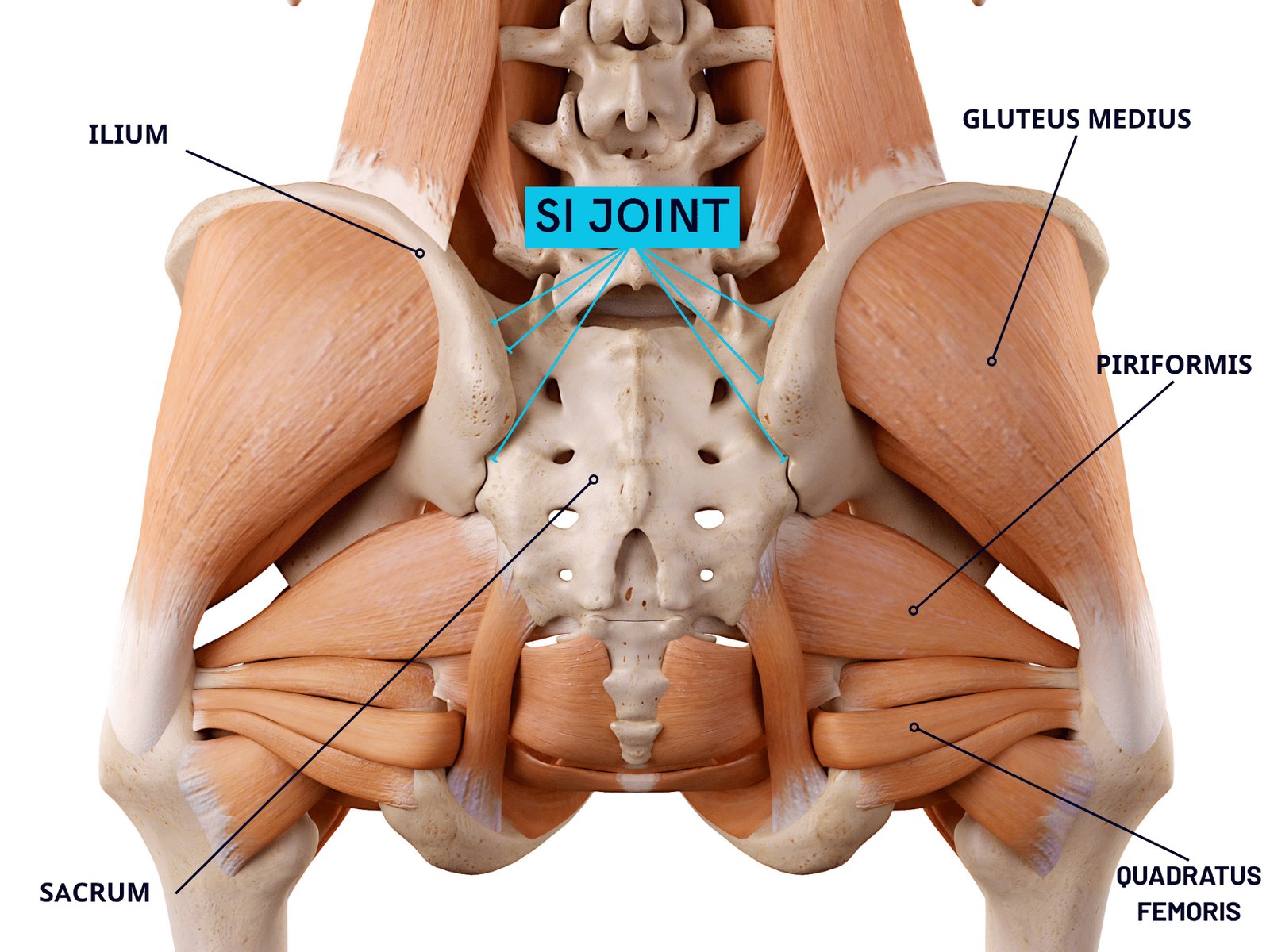
You have two SI joints. They sit at the base of your spine, where the sacrum meets the right and left sides of your pelvis.
These joints transfer force between your upper body and legs. Walking, climbing stairs, lifting, and getting up from the floor all load this area. The American Family Physician review of SI joint dysfunction describes the joint as a shock absorber that transfers vertical loads from the lumbar spine to the lower body.
The SI joint may become irritated when those forces are uneven or poorly controlled. Contributors include pregnancy, falls, repetitive twisting, heavy lifting, prolonged sitting, one-sided standing, gait differences, and too much or too little joint movement.
How Osteopathic Treatment Can Provide Release
Dr. DeMatas performs SI joint adjustments and other hands-on osteopathic treatments in her office when they are appropriate for the patient. That does not mean she is pushing a joint that has “slipped out” back into place. She is assessing how the pelvis, spine, hips, and surrounding muscles are moving together, then treating the restrictions or guarding she finds.
Techniques may include muscle energy technique (MET), strain-counterstrain, or a carefully selected high-velocity, low-amplitude adjustment. The goal is often to reduce protective tension and restore more comfortable motion so the patient can move and exercise more effectively. These are controlled clinical treatments, not forceful self-adjustments.
Research supports that balanced approach. A 2024 review of 16 randomized trials found that manual therapy improved disability, although its effect on pain was less certain. Another randomized trial found improvement with exercise, manipulation, and a combination of the two.
Dr. D’s take: An adjustment can create a useful window of relief. What you do with that window matters. Gentle mobility and better glute and core control are what help your pelvis manage everyday movement after you leave the office.
The Best Exercises for SI Joint Stability
Exercises help the muscles around your hips, pelvis, and core support the SI joint during walking, lifting, and turning. Instead of trying to stretch or “reset” the joint over and over, the goal is to restore comfortable movement where needed and build enough strength to keep your pelvis steady.
The ChoosePT guide to SI joint dysfunction emphasizes strengthening weak muscles, improving flexibility where needed, and correcting movement patterns that place unnecessary stress on the area.
Pelvic Tilt

Pelvic tilts introduce gentle movement through the lumbar-pelvic area without placing much load on the SI joint. They can help you find a comfortable neutral pelvis and lightly engage the deep abdominal muscles.
Cat-Cow

Cat-cow encourages smooth, low-load movement through the spine and pelvis. The goal is not the deepest possible arch or round. It is to reduce stiffness and help the surrounding muscles move without guarding.
Lying Knee-to-Chest

A gentle single knee-to-chest stretch can improve comfortable hip and low-back mobility without forcing both sides of the pelvis into a large range. Stop if it produces sharp pain at the SI joint.
Supine Knee Side-to-Side

This movement introduces a small amount of controlled rotation while both feet remain supported. It can restore comfortable motion without the force or end range of more aggressive twisting stretches.
Glute Bridge

The glutes help control the pelvis and transfer force between the trunk and legs. A two-foot glute bridge strengthens them with symmetrical loading, making it a better starting point than a single-leg bridge during a flare.
Clamshell

Clamshells target the lateral hip, including the gluteus medius. This muscle helps keep the pelvis level during walking and other single-leg activities. Better glute-med control may reduce the side-to-side shifting that irritates the SI region.
Dead Bug

Dead bugs train the core to resist excessive arching and pelvic rotation while the arms or legs move. This control helps the trunk and pelvis stay steady as force travels through the body.
Bird Dog

Bird dogs connect core stability with controlled movement of the opposite arm and leg. They help train the cross-body control used during walking and many daily activities.
TFL Tissue Release

The quadratus lumborum and tensor fasciae latae may become overactive when you protect one side of your pelvis. Gentle tissue release may reduce guarding and make movement feel easier, but it should support your exercise program rather than replace it. Avoid painful pressure and do not press directly over the spine, joint, or kidney area.
The Mass General Brigham guide to SI joint pain similarly emphasizes long-term strengthening and correcting posture or biomechanical issues rather than relying on one quick treatment.
A 5-Minute SI Joint Reset Workout
The Daily Pelvic Tune-Up in the Sporty Doctor app gives you a practical place to start. It combines two mobility exercises, one stability exercise, and a comfortable finishing stretch. The guided workout takes about five minutes, including transitions.
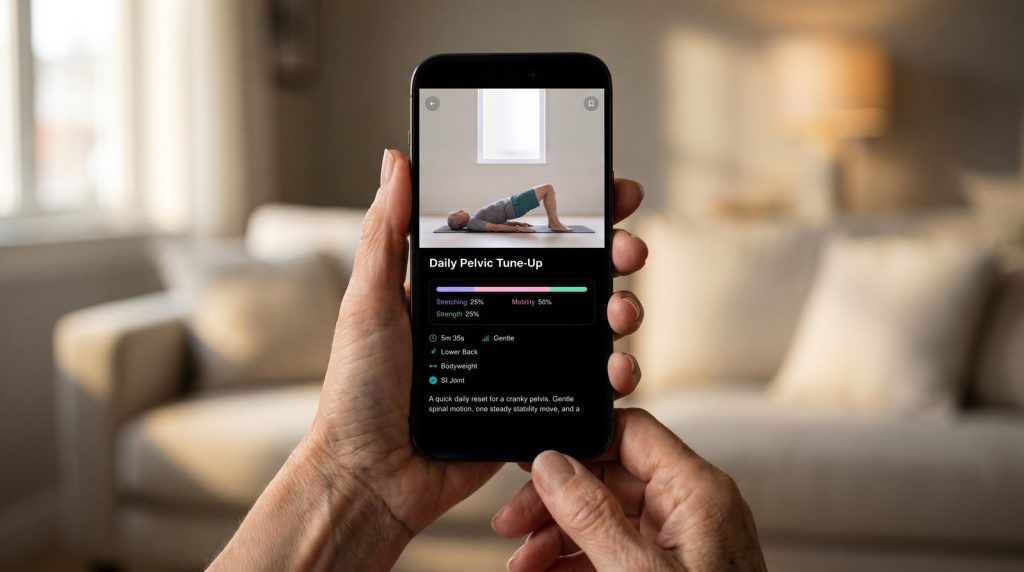
You do not need an exhaustive list. Start with a small group of gentle, symmetrical movements and progress only when they feel controlled.
- Pelvic tilts: Use a small, controlled rocking motion for about 45 seconds or 10 to 12 slow repetitions. This introduces gentle pelvic motion and light core engagement.
- Cat-cow: Move through 5 to 6 slow, comfortable rounds. This encourages motion through the spine and pelvis without forcing the SI joint.
- Glute bridge: Complete 10 to 12 controlled repetitions over about 90 seconds, briefly squeezing your glutes at the top. This is the main stability exercise in the routine.
- Child’s Pose: Finish with 4 to 5 slow breaths, allowing your hips to move toward your heels only as far as feels comfortable.
Move slowly and stay in a comfortable, pain-free range. Skip any exercise that causes sharp pain, radiating symptoms, or a feeling of instability. The Sporty Doctor app provides the complete timed workout with video demonstrations and guided transitions.
How to Progress
Once these exercises feel comfortable, you can gradually add band resistance, reverse clamshells, banded donkey kicks, planks, and controlled squat or lunge patterns.
Single-leg bridges, marching bridges, standing kickbacks, and 90/90 hip switches may be useful later, but they are not ideal starting points. They add unilateral loading or rotation and require better pelvic control.
Progress one variable at a time: range, resistance, balance demand, or repetitions. If your pelvis shifts, twists, or drops, make the exercise easier.
Exercises and Stretches to Approach With Caution
More flexibility is not always the answer. Deep or asymmetrical stretches, forceful rotation, impact, and heavy loading may aggravate an irritable SI joint. Some of these movements can return later, but they are not always good starting points during a flare.
Approach these groups with caution:
- Deep hip stretches: butterfly, fire log, frog pose, and wide-legged forward folds
- Use only if comfortable: figure-four, pigeon, Happy Baby, and seated spinal twists
- High-impact exercises: skaters, high knees, mountain climbers, and banded squat jacks
- Heavy or forceful loading: heavy deadlifts, dumbbell Romanian deadlifts, swings, Russian twists, and forceful rotational exercises
- Possible later progressions: banded Romanian deadlifts and controlled rotational work
The counterintuitive rule: An irritated SI joint often needs better stability and load control before it needs a deeper stretch. Stop if a movement causes sharp pain, instability, or symptoms that remain worse afterward.
Lifestyle Changes That Help the Relief Last
Watch for habits that repeatedly load one side of your pelvis, including hip-cocked standing, carrying on the same side, prolonged cross-legged sitting, or twisting while lifting.
Distribute your weight evenly, alternate carrying sides, hinge through the hips when lifting, and change positions regularly. Movement variety matters more than finding one perfect posture.
Foot mechanics can matter too. If one foot collapses differently or ankle pain changes your gait, the pelvis may be loaded unevenly. Supportive footwear or insoles may help when a clinician identifies a relevant gait issue, but they are not an automatic cure.
A pelvic belt may provide short-term support during pregnancy, postpartum recovery, hypermobility, or an acute flare. The ASPN guideline for SI joint disorders includes pelvic belts and physical therapy among the conservative options used before more invasive treatment. A belt should be a bridge while symptoms settle and strength improves, not a substitute for stabilization training.
Frequently Asked Questions
When Not to Reset Your SI Joint Yourself
Stop self-treatment and seek medical care if you have:
- Significant pain after a fall, collision, or other trauma
- New or progressive leg weakness
- Numbness in the groin or saddle area
- New bowel or bladder changes
- Fever, chills, or unexplained weight loss
- Severe night pain that does not change with position
- Flank pain or urinary symptoms
- Sharp radiating pain with numbness or weakness
These symptoms may point to a fracture, infection, nerve compression, inflammatory sacroiliitis, kidney disease, or another condition that needs evaluation. Do not try to force a pop or adjustment.
If symptoms remain limiting after a real trial of conservative care, a physician may discuss an image-guided injection, radiofrequency ablation, or SI joint fusion. These are later steps, not first-line resets. A review of conservative and minimally invasive SI joint treatments describes physical therapy as a cornerstone of care and reserves invasive options for appropriately selected patients whose symptoms persist.
How to Make Pain Relief Last
A safe, lasting approach follows a simple loop:
- Make sure the pain is actually coming from the SI region.
- Calm the flare with gentle movement and hands-on care when appropriate.
- Build strength in the glutes, hips, and core.
- Progress to controlled everyday and single-leg movement.
- Address the habits or gait issues that keep irritating the area.
You do not need to force your body back into place. You need to give it the strength and control to handle movement again.
The Sporty Doctor app includes physician-designed SI joint workouts that begin with gentle mobility and symmetrical stability before progressing to more challenging glute and core work. Each routine provides easy-to-follow video guidance at home.
Your body is built to move. The goal is not one perfect adjustment. It is helping your body feel secure enough to keep moving well.
- StatPearls: Sacroiliac Joint Pain
- American Family Physician: Sacroiliac Joint Dysfunction: Diagnosis and Treatment
- American Society of Pain and Neuroscience Best Practice Guideline for the Treatment of Sacroiliac Disorders
- Minimally Invasive and Conservative Interventions for the Treatment of Sacroiliac Joint Pain
- The Effectiveness of Physiotherapy Interventions for Sacroiliac Joint Dysfunction: A Systematic Review
- Efficacy of Manual Therapy for Sacroiliac Joint Pain Syndrome: A Systematic Review and Meta-Analysis
- ChoosePT: Physical Therapy Guide to Sacroiliac Joint Dysfunction
- Mass General Brigham: Sacroiliac Joint Pain: Symptoms and Treatment
- Effectiveness of Exercise Therapy and Manipulation on Sacroiliac Joint Dysfunction: A Randomized Controlled Trial
- Strain-Counterstrain Versus Muscle Energy Technique in Sacroiliac Joint Dysfunction

Dr. DeMatas practices holistic, evidence-based family medicine that focuses on treating injuries and transforming lives through prevention, rehabilitation, and diet. She is a licensed, practicing Physician in Jacksonville, FL.
