


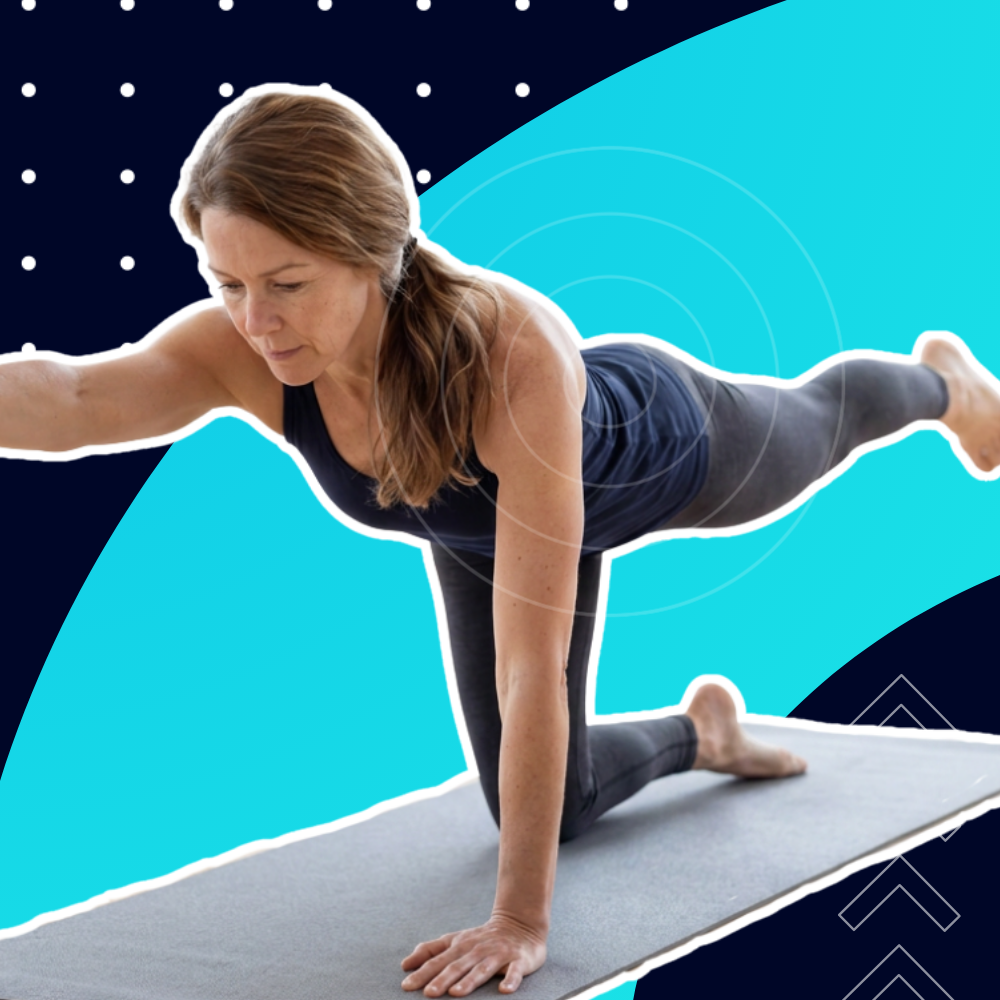
Lower back pain can make sitting, walking, bending or sleeping harder than it should. These 11 physical therapy exercises offer a gentle starting point for uncomplicated symptoms, with a mix of mobility, stretching and core stability.
Back pain can come from a strain, arthritis, disc irritation or a sensitive nerve, and each may need a different plan. Keep every movement comfortable and stop if pain spreads down your leg or clearly worsens. These exercises are not a substitute for an exam or personalized care.
Why One Routine Can Work for Different Kinds of Back Pain
A strain, irritated disc, arthritic joint or sensitive nerve may each require a different plan. That is why this routine focuses on mobility, comfortable stretching and trunk stability that can support many lower back programs.
The American College of Physicians guideline recommends exercise as a first-line treatment for persistent low back pain. No single style is right for everyone, so a balanced mix of mobility, stretching and core work is a sensible starting point.
Gentle Mobility Exercises to Calm a Painful Lower Back
Begin here on a bad day, after time away from exercise or if you are over 60 and want a comfortable starting point. These four movements take the hips and spine through an easy range with very little load.
In a 320-person trial, a 12-week program containing pelvic tilts, cat-cow and knee-to-chest movements matched physical therapy for chronic low back pain and reduced pain-medication use. A year-long randomized trial found that a program containing pelvic tilts and knee-to-chest movements reduced average pain from about 6 to under 4 out of 10. An extension-focused program did better, however, and temporary leg symptoms occurred only in the flexion group. Keep your range comfortable and stop if pain begins moving into your leg.
If you need an easier starting point, see these exercises for seniors.
Pelvic Tilt

A pelvic tilt is a gentle place to start when your back feels guarded or stiff. The floor supports you while you practice moving your pelvis without asking the rest of your body to do much. It may look simple, but that is the point. You are giving your lower back a safe chance to move again. Keep the motion small and comfortable rather than pressing hard into the floor.
How to do it
- Lie on your back with your knees bent, feet flat on the floor and arms relaxed by your sides.
- Let your spine rest in a comfortable neutral position.
- Tighten your abdominal muscles and tip your pelvis toward you, allowing your lower back to move closer to the floor.
- Pause briefly.
- Release the tension and return to your starting position with control.
Cat-Cow Stretch

Cat-cow gives you a low-pressure way to explore rounding and arching through your spine. It works well as a warm-up when the first few minutes of movement feel stiff, especially after sleeping or sitting for a long time. Let your breathing set the pace and allow the motion to travel smoothly through your spine. Your range may be smaller on a painful day, and that is completely fine.
How to do it
- Start on your hands and knees, hands under your shoulders and knees under your hips.
- Breathe in and let your belly drop toward the floor as your chest and tailbone lift gently.
- Breathe out and round your back toward the ceiling, tucking your chin and tailbone.
- Move slowly between the two positions, using only the range that feels comfortable.
- Stop if either direction increases pain or sends symptoms into your leg.
Knee-to-Chest Stretch

For some people, bringing one knee toward the chest can feel good after standing, walking or sitting has left the lower back tired. Move into the stretch slowly and notice whether your back begins to relax. Pull only until you feel a mild stretch or sense of relief. There is no benefit to forcing the knee closer. Skip this movement if it sends pain, tingling or numbness farther into your leg.
L5-S1 ELDOA

This held-position exercise is designed to help you lengthen through the lowest part of the back while staying tall and controlled. It can feel challenging at first, so focus on comfortable alignment instead of chasing a strong stretch. A small randomized trial found that ELDOA improved pain and function in people with low back and buttock pain, although standard stretching performed as well or better. Stop if it brings on leg symptoms.
How to do it
- Sit tall on the floor with your legs in front of you, using a wall or support if needed for balance.
- Reach your arms overhead and lengthen upward without shrugging your shoulders.
- Keep your ribs stacked over your pelvis and avoid forcing a large arch in your lower back.
- Hold a comfortable version of the position while breathing normally.
- Stop if you feel pain, numbness, tingling or symptoms spreading into the leg.
Hip and Hamstring Stretches That Take Pressure Off the Lower Back
Tight hips and hamstrings travel with back pain more often than they directly cause it. Improving motion around them may still make bending, walking and standing feel smoother.
A 2024 review of 14 randomized trials found that hamstring stretching reduced pain and disability in people with low back pain. If you have sciatica symptoms, keep the knee soft and stop when discomfort travels down the leg.
You can also explore these hip stretches.
Figure Four Stretch

The figure four can be a comfortable choice when the buttock or outer hip feels tight after sitting. Because you perform it on your back, you can relax into the position without balancing or placing much demand on the spine. You should feel a manageable stretch through the hip, not pressure in the knee or symptoms running down the leg. Draw your supporting leg farther away from your chest to reduce the intensity, or skip the stretch if those symptoms continue.
Hamstring Stretch With a Strap

Stretching the hamstring while lying down lets the floor support your back, which often feels more comfortable than reaching toward your toes from standing. Use the strap to guide the leg instead of pulling it as high as possible. Keeping your back comfortable matters more than straightening your knee. A soft knee and relaxed ankle can reduce tension when the back of the leg feels sensitive. Stop if the stretch causes symptoms to travel farther down the leg.
Kneeling Lunge With Side Bend

This variation combines a gentle hip-flexor stretch with a reach through the side of the body. It can be useful when sitting leaves the front of the hip and the side of the trunk feeling restricted at the same time. Move into the stretch gradually and stay tall through your torso. Keep your ribs stacked over your pelvis so the movement does not turn into a deep lower-back arch.
How to do it
- Kneel with one knee on the floor and the other foot in front of you.
- Shift your hips forward until you feel a mild stretch at the front of the hip on the kneeling side.
- Raise the arm on the kneeling side and reach slightly overhead and away from that side.
- Keep your ribs down and avoid arching your lower back.
- Hold only a comfortable stretch, then repeat on the other side.
Core Exercises for Lower Back Pain That Spare the Spine
These exercises build trunk control without asking you to move your lower back through a large range. Start them after the gentler mobility work feels comfortable. The goal is not to “fix” your core or prove that weakness caused your pain. It is to help your trunk handle everyday movement with more confidence and control.
A Cochrane review of 29 trials found that core and stabilization exercises can improve pain and function for people with chronic low back pain, although no one style is right for everyone. In clinic testing of core exercises in people with chronic back pain, bird dogs and planks were among the better-tolerated options. The best choice for you is one you can perform consistently without worsening symptoms.
Browse our physical therapy exercise library.
Dead Bug

The dead bug teaches you to keep your trunk steady while your arms and legs move, similar to the control you need when reaching, walking or carrying something. Start with a small range and move slowly enough that your lower back stays comfortably supported by the floor. You should still be able to breathe normally. If your back begins to arch or strain, shorten the reach, move one limb at a time or keep one foot on the floor.
Bird Dog

A bird dog challenges balance and trunk control without requiring a large lower-back movement. It also connects the opposite arm and leg in a pattern your body uses while walking. Reach long in both directions, but do not worry about lifting high. Imagine balancing a glass of water across your lower back and try not to spill it. The bird dog is one of the three exercises in Stuart McGill’s well-known “Big 3” for the lower back.
Glute Bridge

The glute bridge helps you practice using your hips while keeping the movement controlled through your trunk. That same hip-driven pattern matters when you stand from a chair, climb stairs or lift something from the floor. Press evenly through both heels and lift only as high as you can without pinching or over-arching your lower back. A smaller, controlled bridge is more useful than a higher one that shifts the work into an already sore back.
Plank

Save the plank for later in the progression, once the gentler movements feel comfortable. It asks your shoulders, hips and abdominal muscles to work together while your trunk stays steady. Begin with a short hold and stop before your lower back starts to sag or your breathing becomes strained. A brief, well-controlled plank is more useful than a long hold with poor form.
How to do it
- Start on your hands and knees, hands under your shoulders. If your wrists complain, drop to your forearms.
- Tighten your abdominal muscles and form a straight line from your shoulders through your hips to your knees.
- Breathe normally and hold without letting your lower back sag.
- Stop the set when your form changes, then rest before repeating.
- Progress to a full plank on your toes only when the knee-supported version feels controlled and symptom-free.
Lower Back Pain Exercises to Avoid for Now
During a flare, avoid movements that repeatedly compress, twist or take your spine to its end range under load. This is a temporary list designed to help an irritated back settle.
- Loaded or end-range spinal bending, including sit-ups, crunches and toe touches
- Heavy hinging or twisting, including deadlifts, wood chops and kettlebell swings, while a strain settles
- Deep, sustained backbends
- Impact and jumping, including jump squats, high knees and mountain climbers
This advice is for a flare, not a life sentence. A review of 41 systematic reviews found no consensus that everyday posture or bending causes back pain.
The NICE low back pain guideline also advises against belts, corsets and traction. As symptoms improve, loading can return in a controlled progression. These resistance band back exercises can help you rebuild strength when you are ready. If hip pain is also limiting you, review these hip pain exercises to avoid.
How Often to Do These and When to Expect Relief
Use the four mobility exercises daily during a flare, then add the hip stretches and core work as symptoms settle. Expect progress over weeks, not overnight.
When pain has lasted for months, a Cochrane review of 249 trials found that exercise produces a moderate and meaningful improvement compared with no treatment or usual care.
Walking counts too. In a randomized trial of 701 adults, a progressive walking program reduced the rate of back pain returning. The best low back pain rehabilitation exercises are the ones you can perform consistently without making your symptoms spread or intensify.
A physical therapist can add hands-on care, assess how you move and build a plan around your specific limitations.
When Lower Back Pain Needs a Doctor, Not an Exercise
Most lower back pain can be managed conservatively, but certain symptoms need medical attention. Stop the routine and seek care if you have any of the warning signs outlined in an international red-flag framework:
- New loss of bladder or bowel control, or numbness around the saddle area. These can signal cauda equina syndrome and require emergency evaluation the same day.
- Pain that began after a fall or car accident, especially if you are over 65 or take steroids long term.
- Unexplained weight loss or a history of cancer.
- Fever along with back pain.
- Leg weakness or other nerve symptoms that are getting worse.
- Pain that has not improved after six weeks of consistent care.
When something feels meaningfully different from your usual back pain, trust that signal. An exam can help rule out a serious problem and point you toward the right next step.

Dr. DeMatas practices holistic, evidence-based family medicine that focuses on treating injuries and transforming lives through prevention, rehabilitation, and diet. She is a licensed, practicing Physician in Jacksonville, FL.
