

How to Do Standing Marches
Stand tall with your feet hip-width apart.
Lift one knee up toward hip height.
Lower your foot back to the floor with control.
Alternate legs at a slow, even pace.
Keep a steady rhythm from rep to rep.
Hold a kitchen countertop or sturdy chair back if your balance feels shaky, or stand free if you are warming up before a run. Aim for 30 to 60 seconds, or 10 to 15 lifts per leg. The slower you lift and lower, the harder your standing leg and core work to balance.
Stay Tall as the Knee Comes Up
Good form means the lift comes from your hip while your trunk stays tall and your standing leg stays steady. When those pieces slip, the work shifts into your lower back or your balance falls apart, so watch for these four habits on every set.
- Leaning back to get the knee higher swaps lower-back arching for true hip flexion and switches your core off.
- Rushing and bouncing from foot to foot relies on momentum instead of muscle control, skipping the brief single-leg hold at the top.
- Letting your standing knee cave inward happens when the supporting hip tires, whether late in a warm-up or during balance practice, so keep that knee tracking straight over your foot.
- Looking down at your feet rounds your upper back and tips your weight forward, throwing off your balance.
Why Marching in Place Builds Balance and Stride
Two groups get the most out of marching in place: adults over 50 who have been told to work on daily balance, and runners who need a quick, zero-space warm-up to wake up stiff hips before hitting the road. Because you control how high you lift and can keep a chair or wall within reach, it is also a safe way to ease back into movement after a hip or knee flare-up, much like our hip arthritis exercises.
Every knee lift puts you in a brief single-leg stance, forcing your supporting ankle, hip, and trunk to stabilize you. A 2021 systematic review in Physical Therapy notes that the single-leg stance test is one of the standard clinical tools used to gauge fall risk in older adults. Practicing that momentary one-leg hold pays off: a 2019 Cochrane review of 108 trials (23,407 older adults) found that exercise programs built around balance and functional training cut the rate of falls by about 23%. At the same time, repeatedly driving your knee up strengthens your hip flexors and core for a taller walking or running posture, helping your feet clear the ground cleanly instead of shuffling.
Hip Flexors Lift, Glutes Hold You Up
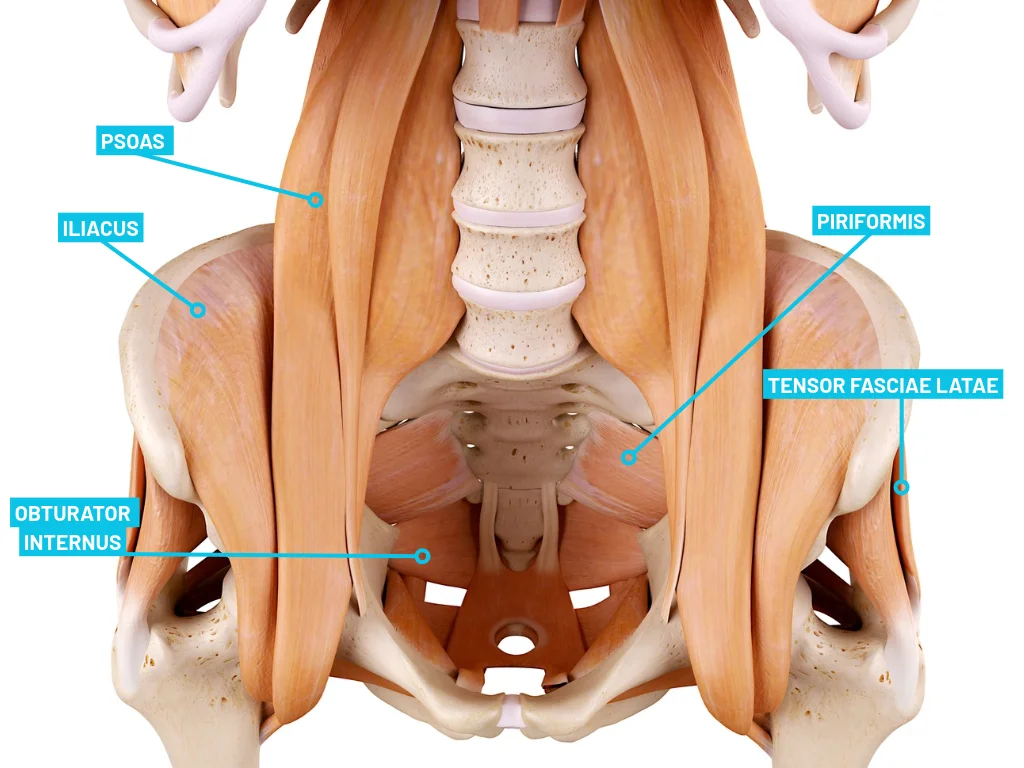
Each rep asks your body to do two jobs at once: flex one hip to raise the thigh while the opposite leg and trunk hold you upright against gravity. Your iliopsoas, the deep hip flexor at the front of the hip, does most of the lifting, assisted by the rectus femoris down the front of your thigh. As the knee rises, your rectus abdominis and deeper core brace your spine so your pelvis does not tip backward. Meanwhile, the gluteus medius on the standing leg fires hard to keep your pelvis level and stop your unsupported hip from dropping sideways. To build more strength in the lifting muscles, try more hip flexor exercises.
Ways to Dial the Challenge Down or Up
If standing on one foot feels unsteady, start with seated marches on the front edge of a firm chair to wake up your hip flexors safely, which pairs naturally with sit to stand for building lower-body confidence. Once you stand up, resting your fingertips lightly on a wall steadies your sway while your supporting leg still does the work. When you are ready for a harder balance challenge or a sharper pre-run activation, pause for a full two seconds at the top of each lift to take out all momentum, or hold light dumbbells at your sides to load your supporting hip and core.
When to Ease Off
Mild muscular effort or warmth in the front of your lifting hip and lower belly means the right muscles are working. Stop the exercise and check with a clinician if you feel a sharp pinching sensation deep in your hip crease, sharp knee pain on your standing leg, dizziness, or a sense that your supporting leg is about to give way.
- Sherrington C, Fairhall NJ, Wallbank GK, et al. 2019. Cochrane Database of Systematic Reviews. Exercise for preventing falls in older people living in the community.
- Omaña H, Bezaire K, Brady K, et al. 2021. Physical Therapy. Functional Reach Test, Single-Leg Stance Test, and Tinetti Performance-Oriented Mobility Assessment for the Prediction of Falls in Older Adults: A Systematic Review.
