

When you suffer from plantar fasciitis, your shoes can be your best friend or your worst enemy.
As a sports medicine doctor who has dealt with foot pain firsthand, I’ll give you clear, practical guidance on choosing the right shoes. I’ve also consulted podiatrists and colleagues to round out these recommendations and buyers guide.
My best overall picks for everyday wear are the New Balance 990v6 for men and the HOKA Bondi 9 for women, with full men’s and women’s lists below broken out by activity. Whatever you choose, look for firm arch support, a cushioned heel, a stiff heel counter, some heel-to-toe drop rather than a flat, minimalist sole, and a removable insole if you wear your own orthotic.
How We Chose These Shoes
I chose these shoes based on clinical experience, supportive design, fit, cushioning, heel stability, orthotic compatibility, and how well each holds up for different daily activities. Some I have worn or examined myself, and others are current versions of models my contributors and I have recommended for years. Affiliate links do not change which shoes I recommend.
What Makes a Shoe Good for Plantar Fasciitis
Plantar fasciitis is an overuse-related irritation and gradual degeneration of the thick band of tissue that supports the arch along the bottom of the foot. It is one of the most common causes of heel pain in adults and something I treat frequently.
The right shoe will not cure it on its own, but it takes strain off that tissue every step you take, which is why I start almost every patient here. As a sports medicine doctor I treat plantar fasciitis every week, I have worked with endurance athletes down to the Ironman level, and I have dealt with foot pain myself, so these picks come from the clinic and from personal experience. It is also more common in women than in men, though the size of that difference varies by study.

“Improper footwear can overload the foot, strain the arch, and lead to heel pain. I always have my patients begin with proper shoewear.”
— Dr. Dusty Narducci, MD
Good shoes to ease your plantar fasciitis pain can be expensive, so you want to make sure you get it right the first time. But when you go shopping- online or in the store- you might be faced with a lot of unfamiliar shoe terminology. Let’s go over some of the basic parts of a shoe so you can make a better-informed decision at purchase time. This will also help you to understand what to look for in a good shoe later on in the article.
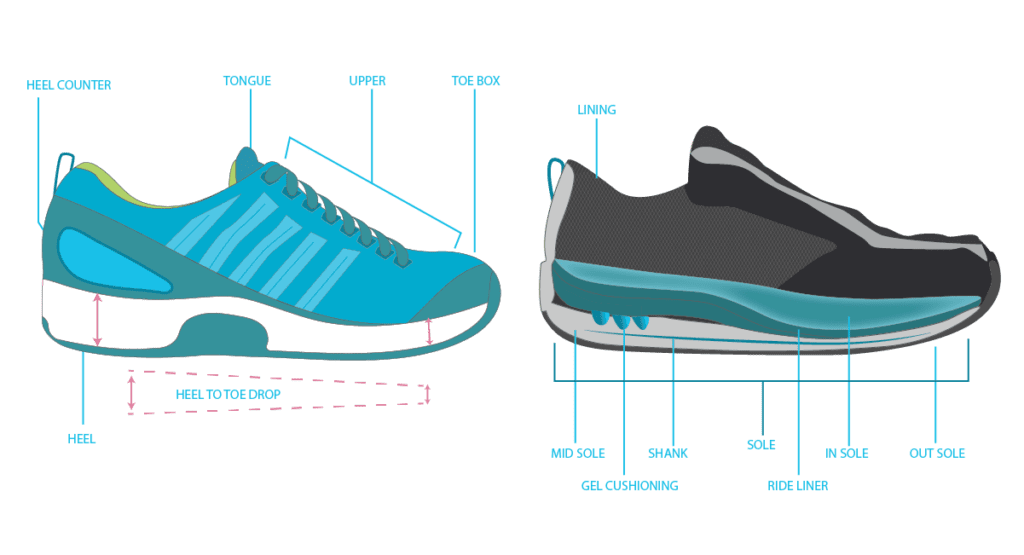
- Upper. This is the top part of the shoe that completely covers the upper part of the foot.
- Lining. A thin layer of material that is usually sewn into the inside of the upper to add support and comfort.
- Tongue. In shoes with laces (or velcro closures) this is the flexible strip of material that protects the top of the foot and disperses pressure.
- Toe box. This is the part at the very front of the shoe that should completely cover and protect the toes.
- Heel. This is located at the rear bottom part of the shoe. It’s job is to support and raise the back of the shoe.
- Heel Counter. This is the piece of stiff material added to the heel to add sturdiness and lock the foot in place. It may be on the outside of the shoe or enclosed in the upper.
- Heel Drop or Heel-to-Toe Drop. This measurement tells you the difference between the height of the heel and the ball of the foot on a shoe. Subtract the height of the ball from the height of the heel to determine the heel/toe drop.

“There are 3 general types of arches: low or flat, normal, and high. The key is finding the shoe that best supports your arch.”
— Dr. Paul T. Marciano, DPM
Heel drop is the height difference between heel and toe. Many people do better with some heel-to-toe drop than in very low-drop or minimalist shoes, especially when the calf and Achilles are tight and pull on the fascia. There is no single perfect heel drop for every foot; the right shoe is the one that supports you without creating new pressure or pain.

“Avoid low drop shoes. Tightness in the calves and stiff ankles makes the feet pronate more to compensate, which puts more strain through the plantar fascia. A higher drop often reduces some of that stress. Find a shoe that matches your foot type.”
— runner and shoe reviewer, Peter Charles
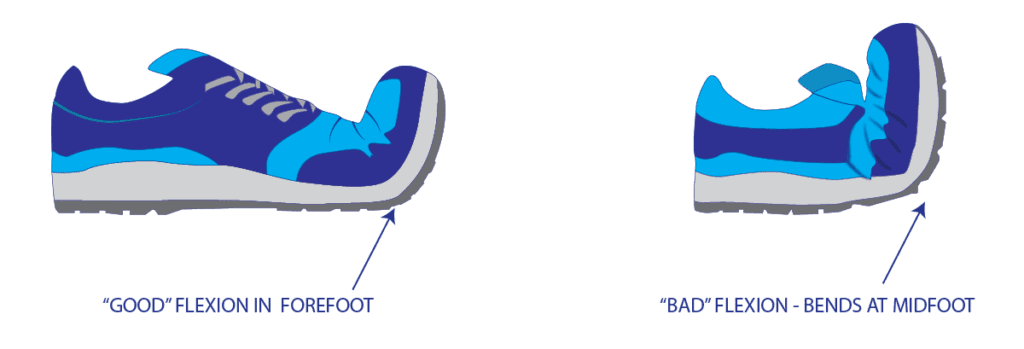
You want a cushioned midsole that does not bend in half. Look for a shoe that bends mainly near the ball of the foot rather than folding through the middle, with a gentle rocker that lets you roll through a step.

“Look for comfortable shoes with a cushioned sole and a decent heel lift. If you are relatively flat footed, look for good arch support, maybe even an off-the-shelf insole to add that extra support.”
— Dr. Brian Donohue, DO
The best shoes let you pull the factory insole and drop in your own orthotic. If you already wear inserts, this matters.
How I Test a Shoe
You do not need a lab. Here are three quick tests I use in the store, and they come straight from one of my contributors, Dr. Douglas Hale, DPM, a biomechanics and orthotics specialist.

“We suggest a motion control shoe to reduce the force on the fascia, and a firm heel counter. Make sure the shoe does not bend in half. Also, an insole that is tight to the arch.”
— Dr. Douglas Hale, DPM
1. The Heel Counter Test. Squeeze the back of the heel between your thumb and finger. It should stay firm, not fold.

2. The Torsional Stability Test. Hold the shoe at both ends and twist. A good plantar fasciitis shoe resists the twist.

3. The Front Toe Flex Test. Push the toe up. It should bend only at the ball of the foot, not through the middle.
Best Men’s Shoes for Plantar Fasciitis
Men’s and women’s shoes are sized differently, but the support features overlap, so choose the version that fits your foot best regardless of which list it is under. Here are my picks for men. Each category leads with my top choice, and more options are gathered at the end of the section.
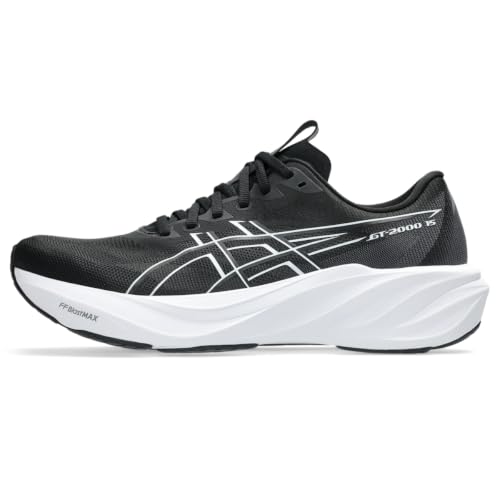
Men’s Running: ASICS GT-2000 15
The GT-2000 has been my go-to running recommendation for years. For plantar fasciitis, a running shoe’s job is to control how far the foot rolls inward and to soften the heel strike, and this is a stability shoe built to do exactly that without feeling like a brace. If you can run at all, it is one of the most supportive things you can put on your foot.
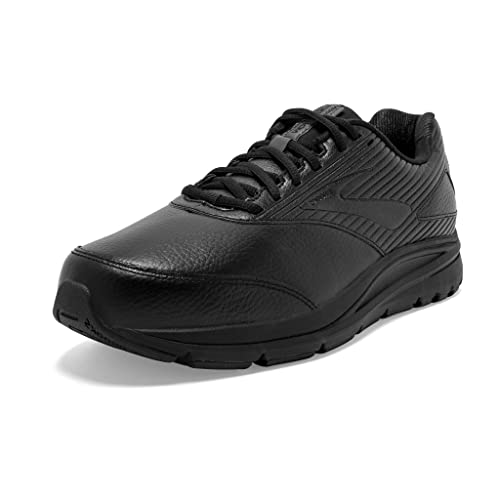
Men’s Walking: Brooks Addiction Walker 2
For long days on your feet, the Addiction Walker is the shoe I point to when someone stands or walks at work and needs real stability in something that still looks like a leather shoe. It is heavy and planted on purpose.
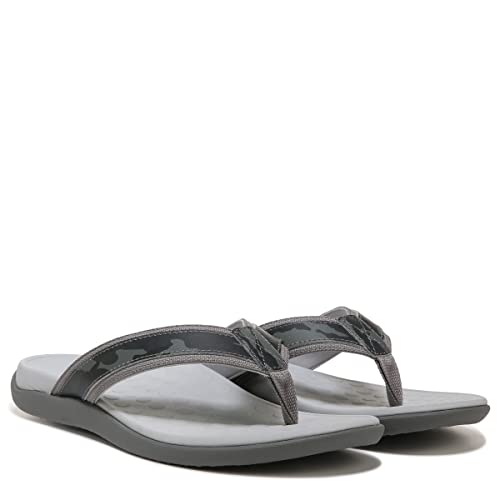
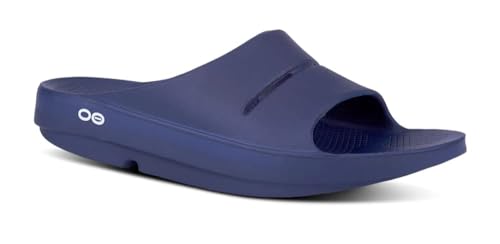
Men’s Sandals: Vionic Men’s Tide
When it is warm you still want arch support, and most flip-flops give you none. The Tide is the rare sandal I am comfortable recommending, because it is built around a real orthotic instead of a flat slab of foam. Keep it for around the house and warm days, not all-day walking.
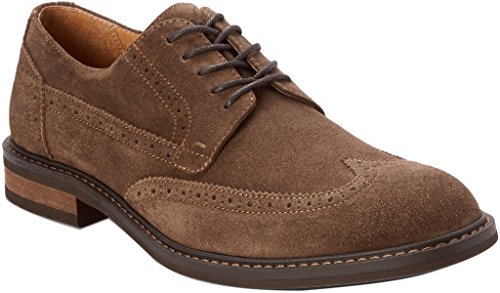
Men’s Dress: Vionic Bowery Bruno Oxford
Dress shoes are the hardest category for plantar fasciitis, because most are flat, stiff, and shallow. The Bowery Bruno is my answer for men who cannot show up to a meeting in sneakers: it looks like a normal wingtip, but the support is hidden inside.
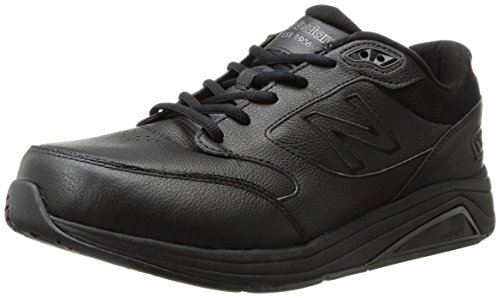
Men’s Best Overall: New Balance 990v6
If I had to pick one shoe most men could live in, it is the 990v6. It is the everyday shoe I reach for when someone wants support and cushioning without an orthopedic look, and it goes with jeans as easily as gym clothes. This is my best overall for daily wear.

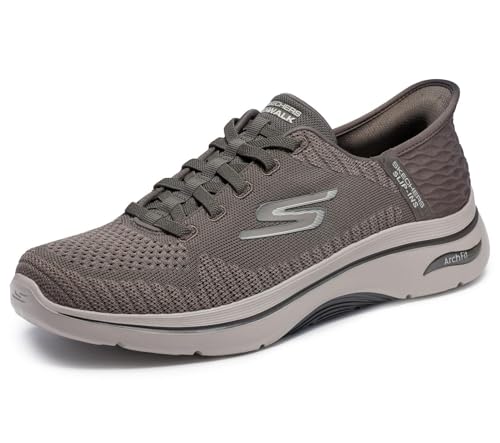
Beyond the picks above, these are other men’s shoes I recommend across categories.
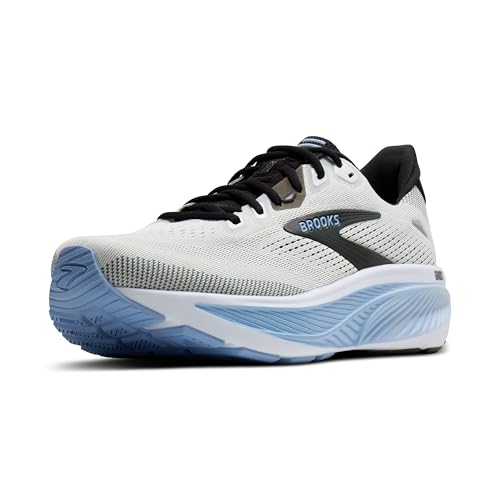
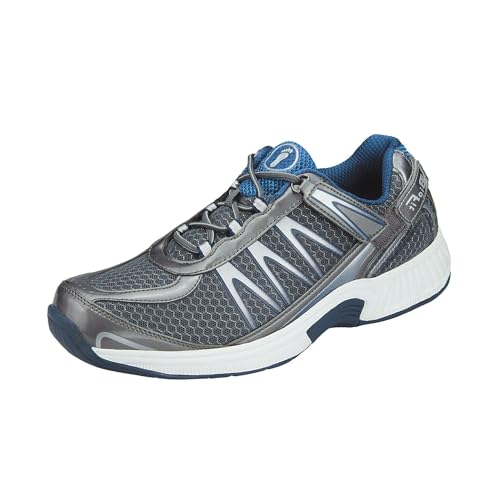
Best Women’s Shoes for Plantar Fasciitis
Here are my picks for women. Women’s shoes are built and sized differently, so look for a secure heel, room in the forefoot, and stable support for long days on your feet. Plantar heel pain is reported somewhat more often in women, though rates vary by study. For dress shoes, keep to a low, stable heel.
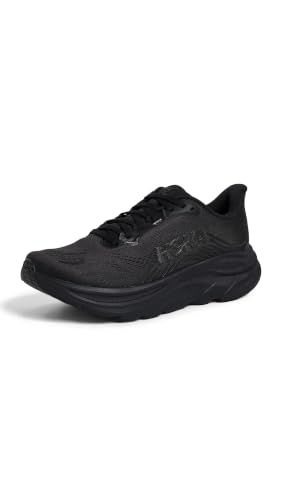
Women’s Running: HOKA Clifton 11
The Clifton is the running shoe I hand to women whose main problem is a sore, pounding heel. It is soft and neutral rather than a stability shoe, so it suits a fairly neutral foot that just needs the impact taken out of each step.
Women’s Walking: New Balance 928
The 928 is a classic supportive walking shoe: motion control, a firm heel, and a smooth roll through each step, with room for an orthotic. It comes in multiple widths and a hook-and-loop option, which helps if bending down is hard or your feet swell. More on walking with plantar fasciitis.


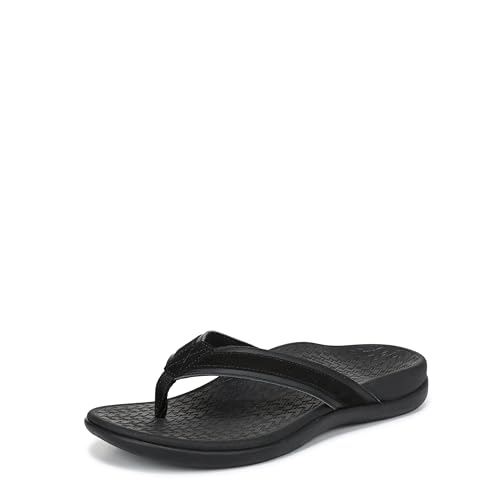
Women’s Sandals: Vionic Tide 2.0
The Tide is the sandal I most often hand to women for warm weather, because it does not force a choice between looking summery and supporting your foot.
Women’s Dress: Vionic Noble Laurie
For dressier occasions, the Noble Laurie lets you skip the flat, unsupportive dress sandal that so often sets off a flare. It is my go-to when a woman needs to look put together but cannot afford to pay for it the next day.
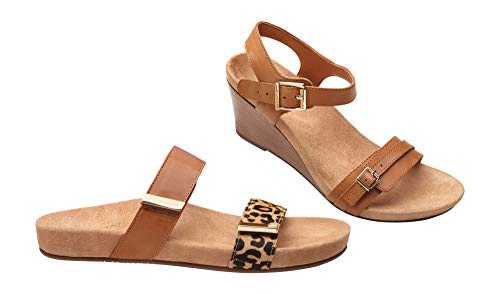
The features that matter: a leather backstrap dress sandal with a concealed orthotic footbed, a low block heel, and an adjustable strap. Keep the heel low and stable and skip anything tall.
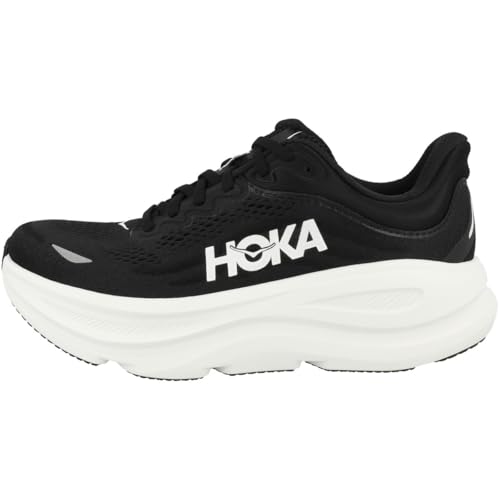
Women’s Best Overall: HOKA Bondi 9
If I had to pick one shoe most women could live in, it is the Bondi. It is the most cushioned shoe HOKA makes and the name that comes up again and again for plantar fasciitis. This is my best overall for everyday walking, errands, and standing.
Additional picks for women’s shoes.
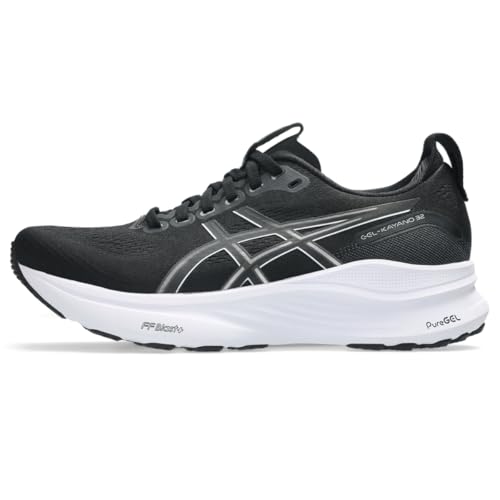


Shoe Brands I Recommend for Plantar Fasciitis
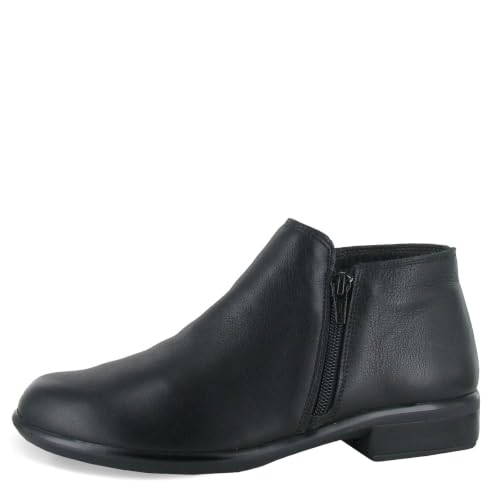
A handful of brands come up again and again in my practice because they build in the support that plantar fasciitis needs. When in doubt, start here:
Shoes to Avoid With Plantar Fasciitis
During an active flare, shoes with little structure or cushioning may make each step harder on the plantar fascia. Skip thin flip-flops, worn-out sneakers, high heels, and anything you can fold in half. Very flexible, minimalist, or zero-drop shoes may also be poorly tolerated until symptoms settle.

“The wrong footwear, or too little protection, makes you worse. The data is clear. Everything else is just conjecture.”
— Dr. Lance Silverman, MD
Shoes Are Only Part of the Fix
The right shoes take strain off your foot, but they will not do the whole job alone. The people who get better, and stay better, pair good footwear with daily stretching and foot exercises, calf and foot strengthening, and support at night when the fascia tightens up. That is where the rest of the plan comes in: at-home remedies, the right insoles, a night splint, and compression socks.

“Shoes are a great addition to help control function, along with functional orthotics. But shoes alone are unlikely to fix your plantar fasciitis for very long.”
— Dr. Barbara Aung, DPM
Frequently Asked Questions
Keep Doing What You Love
When you’ve found a good pair of shoes for plantar fasciitis you’ll know it. The beneficial effects can be immediate when you stand up and find that the pressure on your heel and arch is relieved.
Remember, it matters that you have shoes that support and cushion your heel, so pick shoes for every area of your life that can give you the support that you need, including plantar fasciitis insoles to provide arch support for non-therapeutic footwear.
If you invest in some of the best shoes for plantar fasciitis and follow a strict treatment plan you can expect to see plantar fasciitis relief in just weeks. Treatment should include RICE (rest, ice, compression, and elevation) for the affected foot, stretching, and OTC medications to relieve pain when needed. 97% of people who consistently follow an at-home treatment routine will recover fully within six months, 18 at the most.
If your plantar fasciitis does not go away after 6-12 months of home remedies and nonsurgical treatment, it may be time to talk to your doctor about pursuing a more aggressive solution like a corticosteroid injection, shock wave therapy, or surgery to repair the plantar ligament.
I hope this expert medical advice has helped put you on the path to phenomenal footwear that brings quick relief for your plantar fasciitis pain!

